Event Storming and Context Mapping for Data & AI Product Managers
Discovery and requirements gathering are among the most critical phases of data product management. Yet they're also among the most challenging. Too often, data teams fall into the trap of being order-takers, responding to ad-hoc requests rather than...

Discovery and requirements gathering are among the most critical phases of data product management. Yet they're also among the most challenging. Too often, data teams fall into the trap of being order-takers, responding to ad-hoc requests rather than proactively shaping a strategic roadmap. To truly unlock the value of data as a product, you need to reverse this narrative.
But how do you discover data products when stakeholders themselves might struggle to articulate what they need? How do you gather requirements and design solutions when everyone has a different mental model of how things work?
This is where EventStorming and Context Mapping—two powerful tools from the Domain-Driven Design community—become invaluable for data product managers.
The Discovery and Requirements Challenge
Many stakeholders are accustomed to treating data as a commodity, something they simply request when needed. They may not have the vocabulary or mental models to think about data products strategically. As a data product manager, you need tools that bridge this gap and enable collaborative discovery and requirements gathering.
These are the key components in order to run effective sessions in which you manage to uncover the needs of your consumers:
- Collaboration across diverse teams and functions
- Deep understanding of how the organization actually operates
- A shared language to discuss complex processes and systems
- Frameworks that help stakeholders articulate their needs
Enter EventStorming and Context Mapping
While EventStorming and Context Mapping are distinct techniques, they share powerful principles that make them effective for data product discovery and design:
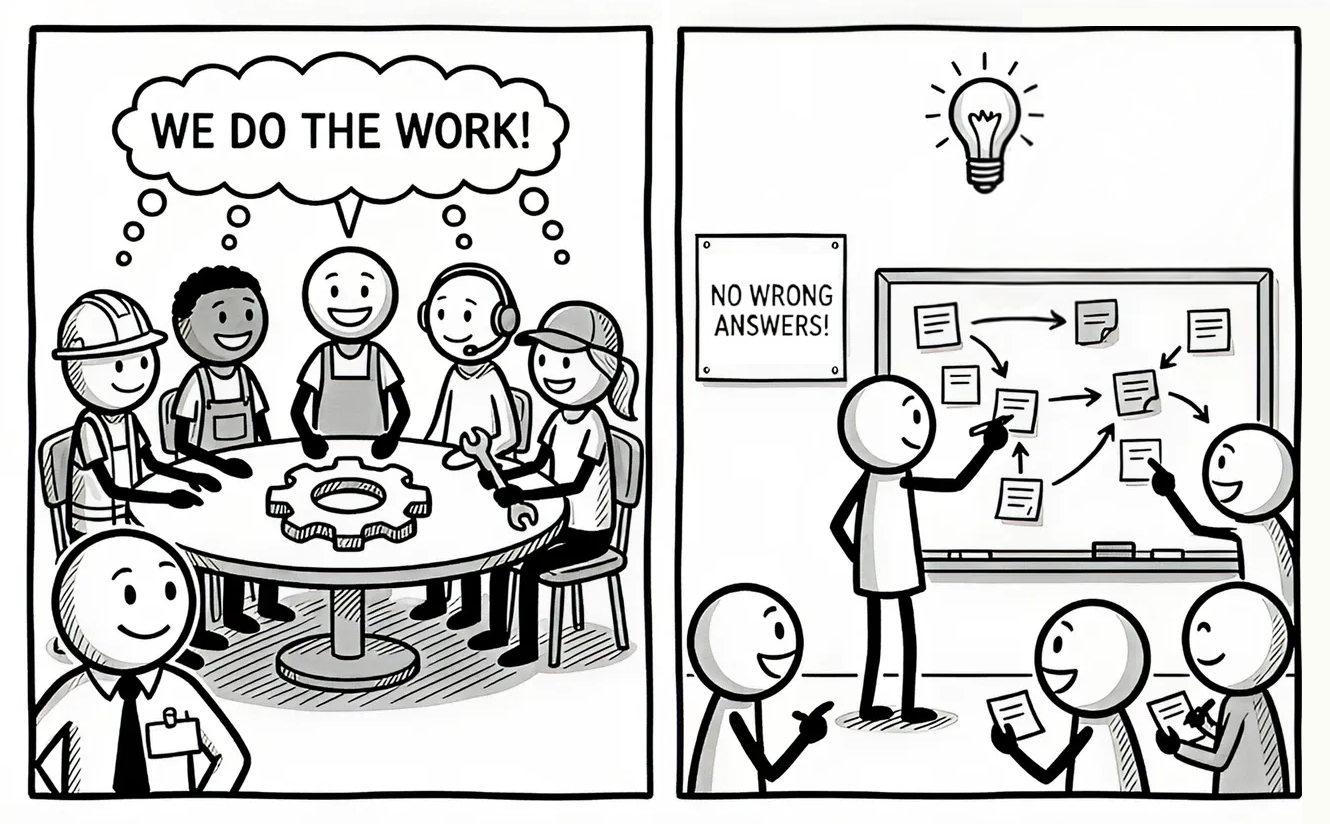
- Bring the right people together. Not managers or directors, but the people who do the actual work: those who feel the pain of inefficient processes and possess deep operational knowledge. These are your domain experts, even if they don't carry that title.
- Create a collaborative space. Whether it's a physical whiteboard or a virtual canvas, you need a shared modeling space where everyone can contribute freely. The key is psychological safety: there are no wrong answers, and all perspectives are valued.
- Build shared understanding. By visualizing processes, systems, and interactions together, teams develop a common language and mental model that transcends organizational silos.
Context Mapping in Action: Displacing Legacy and Discovering Future State
We recently worked with a global retail company headquartered in the Netherlands undergoing a massive transformation: implementing a new data model to support their product lifecycle management. Dozens of systems across their IT landscape consumed data from the old model, each with custom point-to-point integrations built at different times using different technologies.
The challenge was about understanding a complex web of dependencies, many of which existed only in the minds of developers (some of whom had left the company). Knowledge gaps were everywhere.
Context Mapping became our guide.
We ran sessions with each team managing individual downstream systems, bringing together:
- End users who understood how the tools were actually used
- Developers who had worked on the integrations
- Anyone with contextual knowledge about edge cases and workarounds
Together, we mapped the current landscape:
- How each integration was built and how it works today
- Relationships between systems: upstream versus downstream, who conforms to whose standards, who introduces transformations, and where they happen
Boundaries between different contexts: what happens when something goes wrong? Who notices the problem, and who's responsible for fixing it?
But Context Mapping isn't just about documenting the present. It helped us envision the future state: how would the introduction of the new product data model reshape this landscape? Who would be responsible for implementing each piece of the solution?
The sessions created something invaluable: shared ownership. Everyone who would play a role in the migration gained buy-in on the solution. We emerged with a clear understanding of implications, impacts, and responsibilities for successful adoption.
EventStorming in Action: Bringing the Bottleneck into the Picture
Within the same program, we hit a roadblock. The design of the new data model struggled to handle a specific edge case in the product lifecycle—an exception to the happy path that threatened to derail implementation.
This is precisely where EventStorming shines.
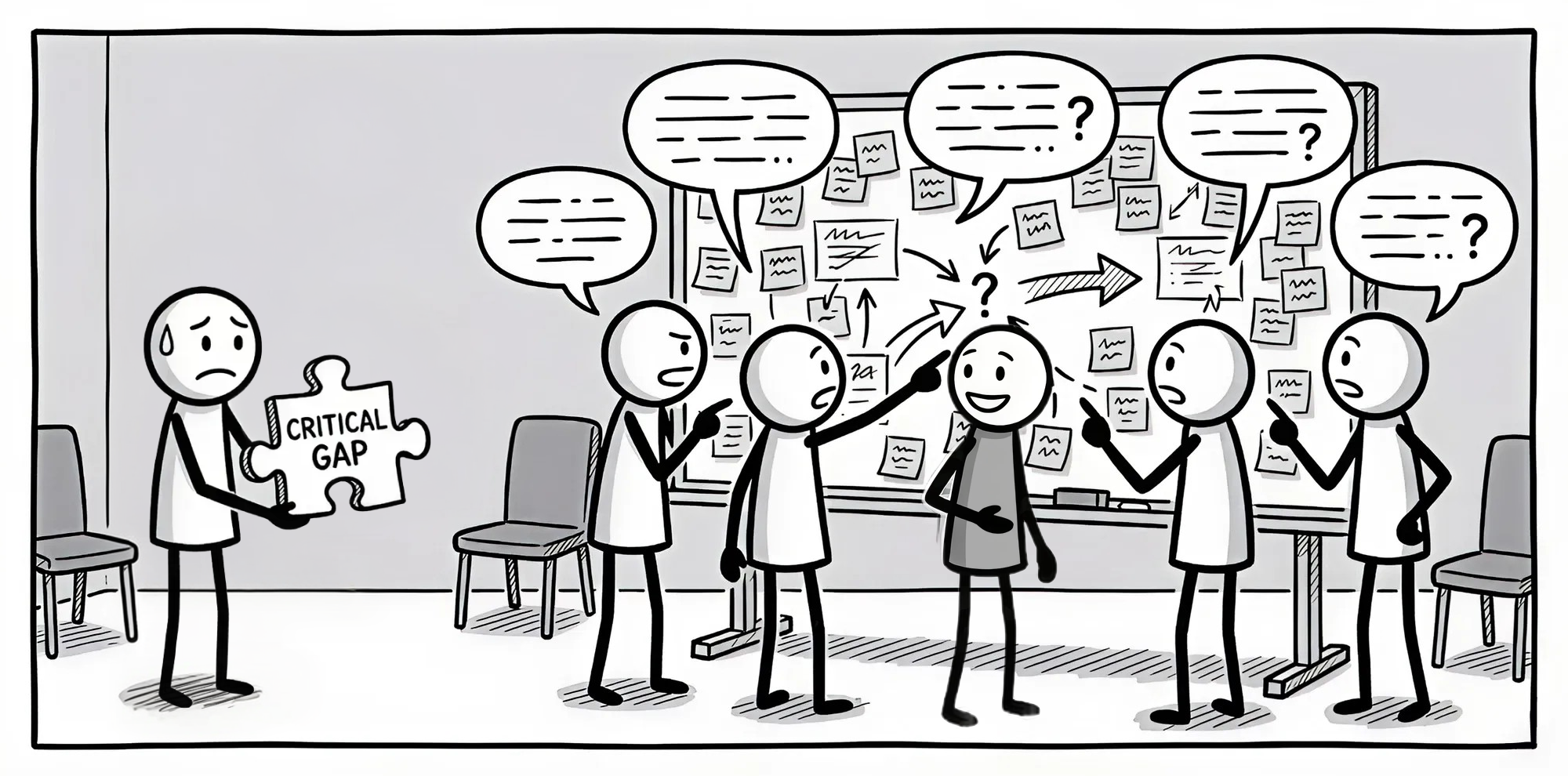
Same principle: bring in people who do the operational work day-to-day. But rather than focusing on systems and bounded contexts, start with a seed event to kick-start the conversation. No constraints for the participants in terms of time and space, just a huge whiteboard to build collaboratively a timeline of events.
When disagreements emerge about what happens between events, or the correct sequencing, that's your signal as facilitator to dig deeper:
- What are the policies that govern these transitions?
- Which actors and systems are involved?
- What can happen in parallel and what cannot?
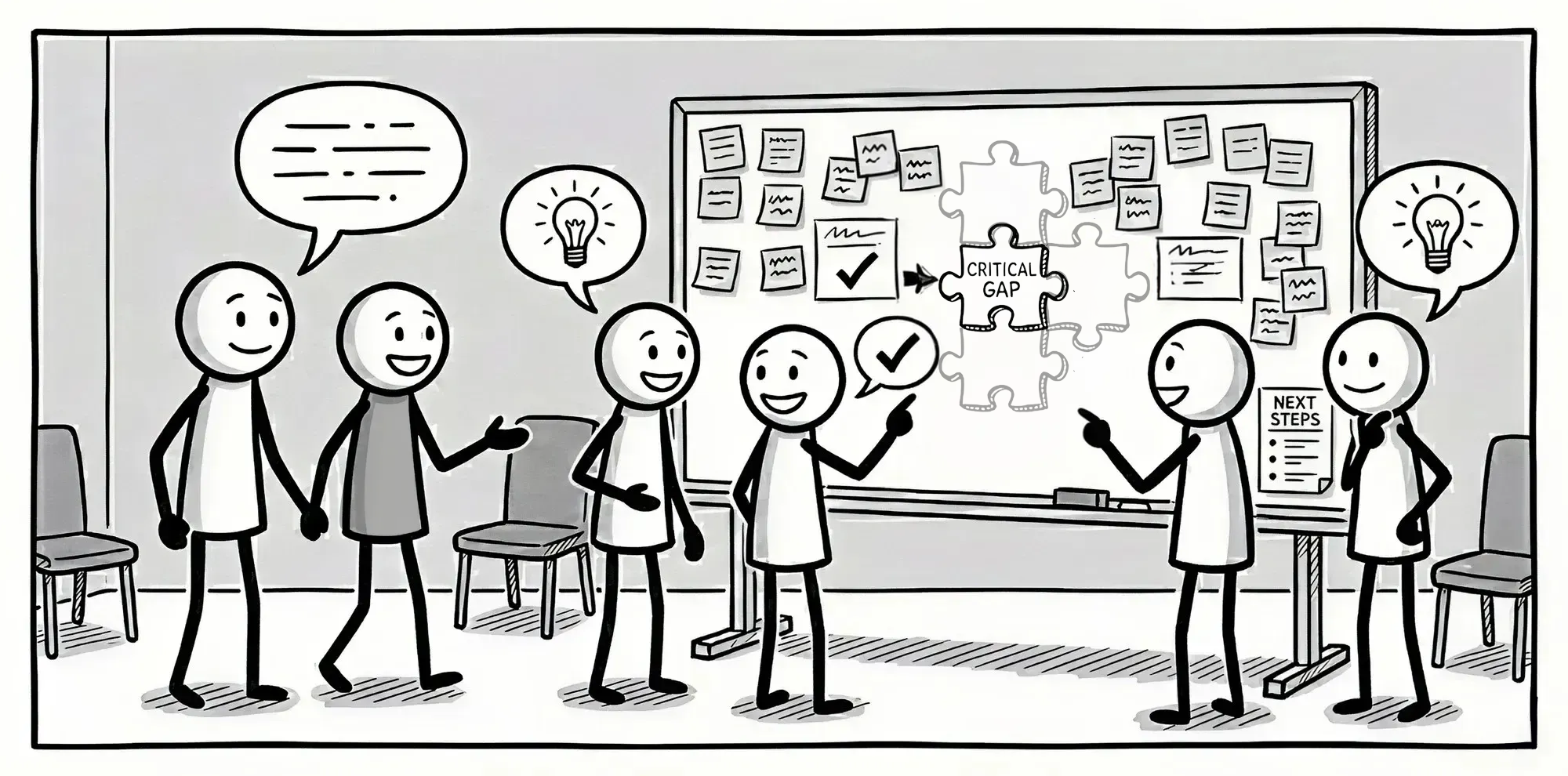
Once we had business experts and engineers in the same room, it was easy to construct an accurate timeline of events that allowed everyone to acknowledge the critical gap in the design of the data model. EventStorming helped us seeing the big picture first, and then modeling the chaos, with the support of a standardized grammar to ensure that everybody was using the same language.
The process also served another crucial purpose: the engineers who would implement the solution gained both technical and business knowledge about the purpose and processes behind what they were building. This deep understanding would prove invaluable during development.
Why These Tools Matter for Data Product Managers
As data product managers, our success hinges on our ability to:
- Build empathy with users and understand their Job-To-Be-Done
- Identify bottlenecks and pain points in existing processes
- Unite the team around the "why" behind what we're building
- Deliver solutions that create real business value
EventStorming and Context Mapping are strategic tools that give you structured, collaborative frameworks to achieve all of this. They transform discovery from a vague, frustrating exercise into a concrete, energizing process.
Team members will enter the room as strangers (or in the worst cases, adversaries!) and leave with a shared understanding of what needs to be done next.
Getting Started: Your Path to Collaborative Discovery
Ready to transform your discovery process? Here's how to begin:
- Start small. Pick one complex process or migration that would benefit from collaborative mapping. Use it as a pilot to demonstrate value.
- Invest in facilitation skills. These workshops require skilled facilitation to create psychological safety and guide productive conversations. Consider bringing in experienced facilitators for your first sessions.
- Focus on the right participants. Remember: doers over observers.
- Embrace messiness. The most valuable insights often emerge from disagreements and confusion—these are signs you're uncovering hidden complexity that needed to be surfaced.
- Document, but don't over-formalize. The real value is in the shared understanding built during the session, not just the artifacts produced.
Discovery doesn't have to be a shot in the dark. With the right collaborative tools and facilitation, you can turn it into your competitive advantage.
Want to go deeper? We're launching DataChef Academy, where you'll learn how to run effective EventStorming and Context Mapping workshops for data products. Join our waitlist to be the first to know when these hands-on workshops become available.